
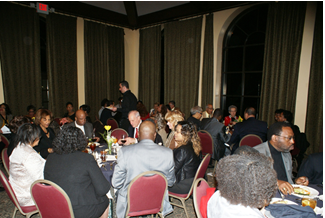
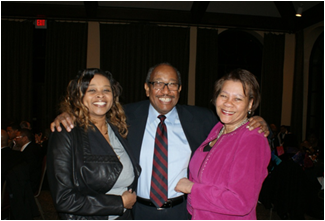
Last Saturday evening, one hundred men and women struck a blow against illiteracy when they gathered at the Club at Sonterra in San Antonio, Texas for a tribute dinner to our local authors and to the memory of the late Dr. David Floyd. School teachers, college professors, corporate executives, business men and women and elected officials came together and offered their support for the establishment of the Dr. David Floyd Writing Project, a proposed 501 c3 foundation dedicated to teaching young men and women the craft of writing fiction, non-fiction, poetry, screen writing and autobiographies.
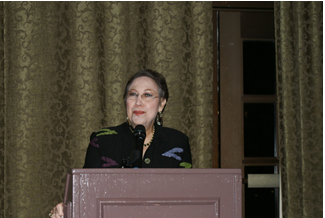 Our guest speaker for the event was Mrs. Aaronetta Pierce, one of the leading cultural giants in our community. She spoke eloquently on the value of one’s heritage and the importance of cultural sustainability as we reach the halfway point of the second decade of the twenty-first century. Mrs. Pierce, a very close friend of the late and great Dr. Maya Angelou, shared some of her cherished memories of that icon with us. Mrs. Pierce reminded us of just how fortunate we were to have a grand lady like Dr. Angelou as a contributor to the grace and beauty of our culture. She also read excerpts from her soon-to-be published, “Letters to My Grandchildren,” which traces her ancestry back to Tennessee and elaborates on her family’s many accomplishments, despite the extreme obstacles they faced in the racist South during their lifetime. Her message was with the love of family and with sheer determination one can realize their dreams despite obstacles. Her reflections on Dr. Angelou as well as her “Letter to My Grandchildren,” will be two of the key essays in the anthology, Black is the Color of Strength, to be released in April 2015 by Prosperity Publications.
Mrs. Pierce’s remarks segued right into my brief words on Dr. David Floyd. David was a man who graduated from high school reading at the second grade level but despite extreme obstacles, attained a PhD in Accounting in January 2014. Unfortunately, we lost David to cancer in October 2014. Before he passed away and at the point he knew he would die, he asked me to write his eulogy because I had helped him write his life story. In my remarks, I described a system that failed David when it passed him from grade to grade knowing he could not read. I spoke about a system that had a cell waiting for David in one of its many prisons. About a system that had a gun waiting for David, so that he could take the life of another young man just like him. About a system that had plenty of drugs waiting for David and a system that had death waiting for David, so that his life would end without any accomplishments at all. But this system did not know David Floyd. He defied all these odds and became an example for other young boys who face the identical pathological conditions in their lives.
 David is no longer here to present to young adults what is possible if you are willing to try. He is a symbol of success against overwhelming obstacles. And that is why the one hundred guests at our dinner, along with our distinguished speaker and many thousands more have made a commitment to create the Dr. David Floyd Writing Project, as a vehicle to spread his story and assist others in their goals to become just as successful as him. Last Saturday evening was our first blow, but stay tuned because there are many more blows yet to come.
You will have the opportunity to read more about David’s fantastic accomplishments in his revised autobiography, Through My Mother’s Tears, to be released in May 2015 by Prosperity Publications. Once you read his story, you will know exactly why we plan to establish our writing project in his name.

 thewriterfred