The Precocious and Creative Mind of Kayla Wilson

This past June a very close friend of Dr. Maya Angelou organized a tribute to the great lady here in San Antonio, Texas. As part of the program, Ms. Aaronetta Pierce asked me to organize a writing project involving young men and women. The goal was to have each of them write an essay or poem expressing what Dr. Angelou meant to them. As a result I was able to organize their writings and publish them as a collection in book form. If possible, I would share every one of these young people’s works with you the readers. They did an outstanding job, and I know Dr. Angelou would have experienced a few tears and some chills of joy, for the expressions of love that emanated from the pages of the publication. Although I could have easily chosen any one of the works to feature on this post, without a doubt, one stood out and that was Kayla Wilson’s poem “Ebony.”

KaylaWilson

Before I share this amazing young lady’s poem, let me articulate one of the many reasons why she is so special.  Kayla has just begun her senior year at the Northeast School of Arts, located within Robert E. Lee High School in San Antonio. She plans to attend Howard University and will major in creative writing and/or journalism. But recently, this young lady has shown the kind of courage that generations of young Blacks displayed in the 1960’s south, when they refused to be victims of a segregated society. Kayla has challenged the Board of Education for the Northeast Independent School District, insisting that they change the name of her high school.

Kayla’s request is based on her firm belief that no school should be named after a man who was a traitor to his country, and most important is not respected by a certain segment of the students. Graduates take pride in calling out the name of the school from which they graduated. There is no way Kayla can do that, if she has to call out the name of a man who she has all the reason not to respect. She took on this battle alone, with very little support. But now has the backing from a majority of Blacks, to include this writer, in San Antonio.

Kayla finds her strength to fight this battle in her love for who she is as a young Black creative artist. She, at the age of 17, has jettisoned the traditional definition of black, and formulated her own, for her comfort and satisfaction. In a school paper explaining the reason for her poem, she wrote, “I consider this poem to be some of my best work because it wasn’t just another poem… ‘Ebony’ represents me and how I view myself in contrast to society’s perception.”

I am pleased and honored to share Kayla’s beautiful expression of the color black in this space.


Black is not scary

or any form of fright.

Black is what holds the

glistening stars at night

Black is fierce and strong

yet gentle and kind.

Black is the juiciest berries

we make into our wine

Black is the passionate will

to win his fight

Black is the powerful back

that sustained every strike.

Black is the great stallion

running free in the wind.

Black is the gorgeous

array of mélange within.

Black is coal from which

diamonds are formed.

Black is the dark gold

that kept us warm.

Black is the thick, full,

and bodacious body parts.

Black is the beating drums

we have in our hearts.

Black is the strong stature

that can withstand burdens of time.

Black is not ugly.

Black is divine.


Kayla is our future. She has the courage of an Ida B. Wells-Barnett, the creative talent of a Toni Morrison, and the determination of a Fannie Lou Hamer. And she has parents who will nurture her natural gifts.  It is incumbent on all lovers of creative art to assure a path of success for this young lady, and by doing so we will know our culture’s sustainability is in excellent hands.
Music to Remember

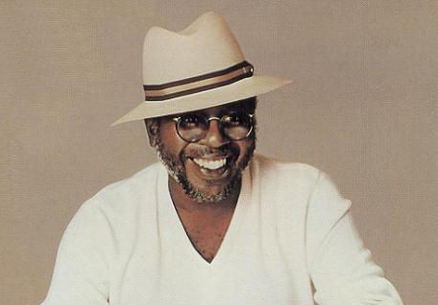
The other night while making some editing changes to the manuscript of the life story about George “Iceman” Gervin, I tuned into Sirius XM Radio, Channel 49 Soul Town. The channel specializes in “back in the day sounds” from the 1960’s and 70’s. Just as I tuned in Curtis Mayfield’s smooth sounds, “Prettier than all the world. And I’m so proud of you. I’m so proud of being in love with you,” flowed from the speakers. The station was playing his hit song from the album, The Anthology: 1961-1977. Those two decades were very magnificent years with some magical music for and about Black America. I remember them well. It was a time when you had Curtis Mayfield paying respect to our beautiful Black sisters with love songs like “Talking About My Baby,” and “Only You Babe,” as well as some socially relevant songs like “Keep on Pushing,” “People Get Ready,” We’re A Winner,” and “Move on Up.” Curtis was in good company with artists like Otis Redding, “Show a Little Tenderness,” Jerry Butler, “For Your Tender Love,” Marvin Gaye, “What’s Going On,” and “Too busy thinking about my baby, I ain’t got time for nothing else.” We had the soft and pleasant voice of Aretha Franklin, “Say A Little Prayer,” and “Respect;’ Gladys Knight, “Midnight Train to Georgia” and “Neither One of Us;” and of course the all time classic Etta James, “At Last,” to name only a few. There were also iconic groups like the Temptations, “Just My Imagination;” the Four Tops, “When She Was My Girl;” and the Supremes, “Come See About Me,” and “Back In My Arms Again.” These were the artists of the 1960’s and 70’s, and they gave us absolutely gorgeous songs with magnificent words of love and hope.

curtis-mayfield

These artists also brought us something else that is very difficult to describe and capture in words, without the sounds of melodic voices to back it up. They brought us the essence of what it is to be Black in America. And most important, it belonged to just us. You could go from one house to the next and hear the same sounds coming from them all; and that was a unifying factor. When Curtis sang, “People get ready, there’s a train coming,” we understood what he was telling us and we all knew about that train. When he sang, “If you had a choice of colors, which one would you chose my brothers,” his message was clear; we must get over the problem of skin color because it was only a superficial way to measure the value of a person. And then there was Bobby Womack’s, “That’s the way I fell about cha,” and we all related to that feeling. Gladys Knight touched deep within us all when she told us to, “Make Yours A Happy Home.” The artists and songs I mention here are only the tip of the iceberg of the fabulous artists that provided us with great music during an outstanding twenty-year period in our history.

My frustration as a writer is my desire to give the written word the same kind of soothing power that we got from our music. My goal is to deliver the message in words, as those artists did in song. Good writing and good music are synonymous. If they both reach their intended goal, then the listener and the reader feel much better about themselves and the people around them. Good writing and good music are about love and not hate. They are about peace and not violence. They allow the dreamer to dream of better times and a better world. They are not corrupting, vicious and ugly. They do not tear down, but build up. Good music and good writing are universal in that they will still be relevant decades from now. And most important, good music and good writing will tell our progeny about the kind of people we were in the beginning of the Twenty-first Century.

The question is how do we come up with a method to determine the quality of the works that represent us as a people? Allow me to suggest that we need only look back to our past, in those glorious days of the 60’s and 70’s; and if we establish an icon such as Curtis Mayfield as our standard bearer by which to measure our greatest qualitative achievements in music, then we can never go wrong.