
On April 23, 1951, Barbara Johns, a sixteen year old girl who was the niece of the firebrand minister, Vernon Johns, summoned all 450 Black students attending R.R. Moten High School in Farmville, Virginia to an assembly in the school auditorium. Against the protest of the faculty, she stood in front of the student body and rattled off a series of complaints about the condition of their school. When the faculty attempted to remove her from the stage, she ordered them out of the auditorium. Barbara recognized the futility to get adults to do what they should, so she was determined not to let them stop the other students and her from eradicating the evil of racism.
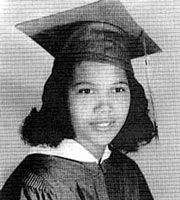
She told her fellow students that Plessy v. Ferguson was nonsense and the white apartheid system would never comply with the Supreme Court decision that separate must be equal. As early as 1951, it was the youth that made it known they would no longer attend classes in tarpaper shacks, having to wear coats in the winter to stay warm and dodge the rain in the spring that freely flowed from the roof down into the building. They objected to riding in buses that often broke down before arriving at their school, always a long distance from their homes. Barbara further told the students they should be outraged that their history teacher had to drive the bus and had to gather wood and start the fire inside the school in order to keep them warm.
Young Barbara Johns shouted loudly for all to hear that the students demanded their rights as Americans to equal treatment. Since the adults couldn’t get the job done, then the young people would. The white school board had regularly rebuffed the demands of the adults to improve the conditions in the school, and reneged on a promise to build a new high school. The adults appeared impotent in their negotiations with the whites, so Barbara and her fellow students decided they would strike. They marched out of the school building and downtown, prepared for a confrontation with the power structure.
After their demands were denied, the students then appealed to the National Association for the Advancement of Colored People (NAACP) for legal assistance. A week later when the officials from the NAACP arrived in Farmville, under the assumption that it was the adults who had made the request, they were surprised when they walked into a room full of students. The NAACP lawyers informed Barbara and the students that their strike might be illegal, and they could be arrested. Barbara boldly retorted there was too many of them for the small jail in their town. But if arrested, they were willing to be incarcerated in defense of their God given rights and liberties. Eventually, the NAACP agreed to argue their case and ultimately it became a part of the larger lawsuit, Brown v. Board of Education that led to the famous 1954 United States Supreme Court decision ruling separate was not equal, and that schools should desegregate throughout the south.
Sixty-four years later another young Black student, over a thousand miles away from Virginia has taken on the same kind of racism that Barbara confronted. It has been over a month ago that I first wrote about the courageous Kayla Wilson, a student at Robert E. Lee High School in San Antonio, Texas. She attends the magnet school for the arts and must go there if she wants to pursue her love for creative writing. In an earlier post, I shared with the readers her outstanding poem titled “Ebony.”

Kayla’s struggle is with the name of her school. She finds it incomprehensible that the North East Independent School District will not consider her request to change the name from Robert E. Lee. I have, in the past, written an article for the San Antonio Express News expressing my unwavering support for Kayla’s position. I outlined four basic reasons for the need to change the name.
- Every student should always be proud of the high school from which they graduate. Years from now they should be able to shout to the world that I got my degree from and then name a school with no shame. That is not the case with Kayla. She will always be ashamed to call out the name of her high school. And what is really shameful is that the school board doesn’t care enough for Kayla and the other Black students, and also many Hispanic students to change the name.
- Kayla and other Black students throughout this country are being taught that slavery was a terrible evil, however, it is long gone and it is time to move on. But how can she possibly move on when everyday she shows up for school, she is reminded of the tragic suffering of her ancestors when she looks at the statue of Lee right out in front of the school.
- Kayla and other Black students are taught that loyalty to country is a virtue and that we all must adhere to the dictates of the constitution that guide America. Kayla recognizes the duplicity in these lessons when a statue of a man who was a traitor to his country, stares at her as soon as she walks out of her civics class.
- Finally it is hypocritical for that school board to suggest to Kayla and other Black students that the evils of the past are gone forever and they need to move on. They are taught that we are now in a post racial America because a Black man was fortunate enough to be elected President. When the school board and the teachers tell Kayla that racism is now dead, but still retain the school name as well as symbols of racism in a statue, they are being dishonest.

Kayla Wilson is our own modern day Barbara Johns. Just like Barbara, Kayla has challenged the school board with very little support from the leaders of the community or the civil rights organizations, with the exception of former Mayor Julian Castro who was the first to call for the name change. But just like Barbara, Kayla now needs the legal, political and moral support of her community, and all communities interested in improving the racial climate in this country. The elected officials of the city, the NAACP, the national and local leaders, even the leaders of the Million Man March, should show up in San Antonio and lock arms with Kayla and let her know she has their support. Nothing less than a mass protest is going to force a change in the status at Robert E. Lee High School. This is a case with strong national implications for the future. If the national leaders of the Black community can ask us to boycott Black Friday in November, they can also come to the aid of a seventeen-year-old high school student who is doing the work that the adults throughout the country should be doing.


 thewriterfred