Music to Remember

The other night while making some editing changes to the manuscript of the life story about George “Iceman” Gervin, I tuned into Sirius XM Radio, Channel 49 Soul Town. The channel specializes in “back in the day sounds” from the 1960’s and 70’s. Just as I tuned in Curtis Mayfield’s smooth sounds, “Prettier than all the world. And I’m so proud of you. I’m so proud of being in love with you,” flowed from the speakers. The station was playing his hit song from the album, The Anthology: 1961-1977. Those two decades were very magnificent years with some magical music for and about Black America. I remember them well. It was a time when you had Curtis Mayfield paying respect to our beautiful Black sisters with love songs like “Talking About My Baby,” and “Only You Babe,” as well as some socially relevant songs like “Keep on Pushing,” “People Get Ready,” We’re A Winner,” and “Move on Up.” Curtis was in good company with artists like Otis Redding, “Show a Little Tenderness,” Jerry Butler, “For Your Tender Love,” Marvin Gaye, “What’s Going On,” and “Too busy thinking about my baby, I ain’t got time for nothing else.” We had the soft and pleasant voice of Aretha Franklin, “Say A Little Prayer,” and “Respect;’ Gladys Knight, “Midnight Train to Georgia” and “Neither One of Us;” and of course the all time classic Etta James, “At Last,” to name only a few. There were also iconic groups like the Temptations, “Just My Imagination;” the Four Tops, “When She Was My Girl;” and the Supremes, “Come See About Me,” and “Back In My Arms Again.” These were the artists of the 1960’s and 70’s, and they gave us absolutely gorgeous songs with magnificent words of love and hope.
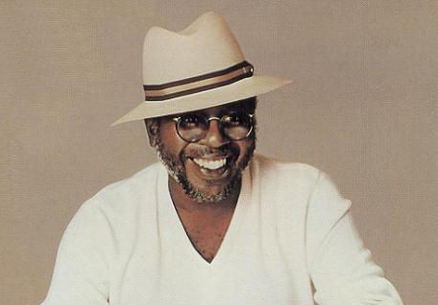
curtis-mayfield

These artists also brought us something else that is very difficult to describe and capture in words, without the sounds of melodic voices to back it up. They brought us the essence of what it is to be Black in America. And most important, it belonged to just us. You could go from one house to the next and hear the same sounds coming from them all; and that was a unifying factor. When Curtis sang, “People get ready, there’s a train coming,” we understood what he was telling us and we all knew about that train. When he sang, “If you had a choice of colors, which one would you chose my brothers,” his message was clear; we must get over the problem of skin color because it was only a superficial way to measure the value of a person. And then there was Bobby Womack’s, “That’s the way I fell about cha,” and we all related to that feeling. Gladys Knight touched deep within us all when she told us to, “Make Yours A Happy Home.” The artists and songs I mention here are only the tip of the iceberg of the fabulous artists that provided us with great music during an outstanding twenty-year period in our history.

My frustration as a writer is my desire to give the written word the same kind of soothing power that we got from our music. My goal is to deliver the message in words, as those artists did in song. Good writing and good music are synonymous. If they both reach their intended goal, then the listener and the reader feel much better about themselves and the people around them. Good writing and good music are about love and not hate. They are about peace and not violence. They allow the dreamer to dream of better times and a better world. They are not corrupting, vicious and ugly. They do not tear down, but build up. Good music and good writing are universal in that they will still be relevant decades from now. And most important, good music and good writing will tell our progeny about the kind of people we were in the beginning of the Twenty-first Century.

The question is how do we come up with a method to determine the quality of the works that represent us as a people? Allow me to suggest that we need only look back to our past, in those glorious days of the 60’s and 70’s; and if we establish an icon such as Curtis Mayfield as our standard bearer by which to measure our greatest qualitative achievements in music, then we can never go wrong.

Black Librarians: Gatekeepers of the Culture

Black America has now reached the point of crisis regarding its existence as a legitimate cultural entity in this country. It is under attack from many different media outlets.  Rap music, much of the street literature, and premiere television shows and movies are detrimental to a positive reflection on the African American culture. Nickie Minaj’s music such as “Feeling Myself,” “Stupid Hoe Lyrics,” “Boss Ass Bitch Lyrics,” and “Lookin’ Ass Nigga Lyrics,” and hood novels such as The Dopeman’s Wife, Last Bitch Standing, A Hustler’s Wife, Whore, Black and Ugly, Black and Ugly As Ever and Crack Head II: Laci’s Revenge and television shows like Empire and soon to be released movie about the rap group NWA, do not represent good art but, to the contrary, effective vulgarity. While these writers and entertainers gain a great deal of notoriety and money, they distort the image of a culture that has taken centuries to build. That is why I have labeled our Black librarians as Gatekeepers of the African American Culture. And that is why I traveled to St. Louis, Missouri last week, along with D. L. Grant, Branch Manager of the Carver Library and Anji Hall-Johnson, librarian at S. J. Davis Middle School, both in San Antonio, to participate in a short but effective presentation on the role of librarians as gatekeepers to our culture.

black caucus 2

Please do not misread the position I am advocating. The individuals who support  the songs and novels as well as television programs I mentioned, have a legitimate right to their position as articulated through those works.  But it is imperative that they do not drown out others that articulate a much more positive message about our culture, and that is the point where I believe our librarians become important. They have a tremendous responsibility to assure that the positive images of African Americans, as created by artists from the past, still endure. Their role as gatekeepers evolved from the evolution of a cultural identity, as projected through the works of the Renaissance artists gathering at the 135th Street Harlem Branch of the New York Public Library, in the 1920’s. Their goal was to elaborate on who we were as a very distinct people in this country. It began with the great migration of Blacks out of the South and into the urban centers in the North.

In the year 1900, 90% of all Blacks lived in the South and 80% of that figure lived in rural communities. At the height of the wartime migration between 1916 and 1919, a half million Blacks moved North. Nearly a million followed between 1920 and 1930. New York’s Black population grew from around 30,000 to more than 100,000.

The Black migration out of the South became more than simply a geographical relocation, but also a transformational change from a rural folk to an industrialized, urbanized people. Richard Wright in his introduction to Horace Cayton and St. Clair Drake’s Black Metropolis in 1945, described that transformation as follows: “Their kinship with the soil altered, men (and women) became atoms crowding great industrialized cities bewildered as to their duties and meaning…The meaning of reality, emotion, experience, action, and God assumed the guise of teasing questions.”

What did it all mean for them? The rules and structures that dictated their lives in the South, no longer applied to living in the North. Something new would now direct them and how that something new would be defined, is what they had to discover. It was the beginning of exploring who they were, why they were in this country, and what lie ahead for them. And most important, they now had the freedom to explore those questions.

Many of these conversations took place at the Harlem Library under the leadership of Regina Anderson and her evening volunteers like Gwendolyn Bennett, Jesse Fausett and Ethel Nance, women who took pride in their race and its culture. They hosted poetry readings, book discussions and general literary activities related to the questions that Black Americans felt free to articulate in the North, but could not do in the South at that time in history. Paul Laurence Dunbar’s famous poem, “We Wear the Masks,” told of the problem artists confronted while in the South.

When poets like Langston Hughes and Countee Cullen, novelists like Rudolph Fisher, Jesse Fausett, Claude McKay and Walter White and painters like Aaron Douglass all met at the 135th Street Library and addressed the issues confronting the Black man and woman in this country, then wrote and painted about those same issues, they were effectively laying the foundation for an identifiable culture. In the 1920’s Harlem, the 135th Street Library became the prototype for libraries located in Black communities throughout the country.

The Black librarians today have inherited the responsibility to continue the great work of Regina Anderson and the other ladies who assisted her in the pursuit of excellence in art and culture. In 1970, Dr. E. J. Josey understood that responsibility when he took the lead in organizing the Black Caucus of the American Library Association. Today, men like Sekou Molefi Baako and D. L. Grant, and women like Anji Hall Johnson are carrying that responsibility forward into this century. As an advocate for my local library here in San Antonio, I plan to continue supporting and sponsoring those events that perpetuate a positive reflection, on what those great artistic progenitors began back in the 1920’s in Harlem at the 135th Street Library.

black library caucus 1