Empire’s Cookie Lyon: “A New Kind of Black Woman”
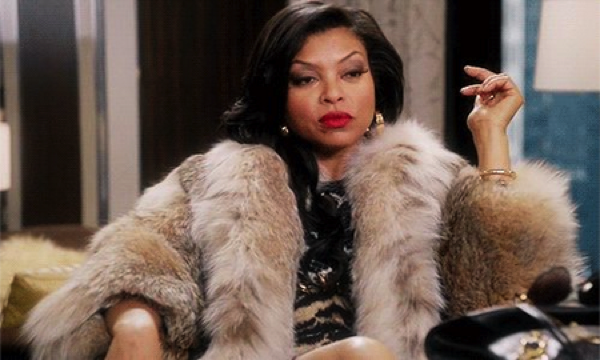
In a recent article in Huffington Post, Zeba Bay, from Voices of Culture, wrote an article on the FOX television series Empire. The title of her article was, “How Empire Broke Down Stereotypes By Embracing Them.” Ms. Bay argues that the value of Empire is that it allows us to combat stereotypes by accepting and embracing all versions of ourselves and acknowledges that blackness is not a monolith. She considers Cookie Lyon an important deviation from the polite characters that have traditionally been acceptable for television. She points to Clair Huxtable as the prototype character who fits that categorization. She then suggests that Clair represents an unbelievable standard by which to measure characters and it is unfair to do so. In a most extraordinary statement, Ms. Bay then writes that Cookie, “Is a new kind of Black woman on television and she is one that we desperately needed.”
WOW!!!!!!!!

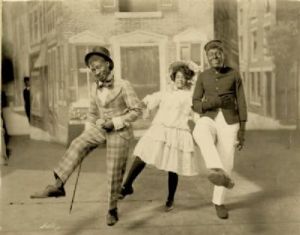
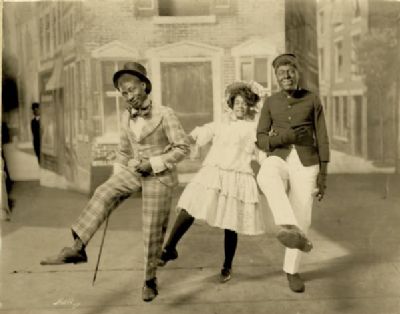
I don’t really know where to begin or better still should I even bother. I guess if Ms. Bay had the need to write that a street-hustling, dope-selling, finger-popping, filthy-mouthed, weave-wearing con, who spent seventeen years in jail, is the new kind of Black woman maybe I should just leave it alone. But to suggest that we embrace stereotypes as a way to deal with them is just a bit much. Using her logic, then our ancestors should have accepted the stereotype portrayals of them in minstrel shows and early movies like Birth of a Nation. At the turn of the century, whites accepted those kinds of stereotypes so that was reason enough for our ancestors to reject them as they did. Minstrel shows used skits and songs performed in an imitation of Black plantation dialect. After the Civil War, white minstrels concentrated their portrayals on the nostalgic stereotype of “Old Darkey.”
Blacks were depicted as carefree, caught up in a life of constant child-like singing, dancing and frolicking. In 1906, Fred Fischer, sold over three million sheet music copies of his first hit, “If the Man in the Moon were a Coon.” The coon was not just the traditional ignorant and indolent figure for derision, but he was devious, dangerous, and sexually on the prowl. Blacks were even allowed to perform in minstrel shows only if they identified themselves as the “real coons.”
Minstrel shows reinforced the perception of the hat in hand, the downcast eyes, the shuffle and scrape, the fumbling words, the head scratching and grin description of the Black man. Whites lined up outside in order to get into theaters to see these insulting acts performed for the entertainment at the expense of an entire race of people. The perception that white audiences had of the Negro was of a clown. The theatrical darky was childlike; he could be duped into the most idiotic and foolish schemes…his songs were vulgar and his stories the most gross and broad; his jokes were often on himself, his wife or woman. He was slow of movement, or when he displayed a quickness of wit it was generally in flight from work or ghosts. (Nathan Huggins, Harlem Renaissance, Oxford University Press, New York. 1971 pg 251) Unfortunately Black Americans could do nothing but stand by and observe the deracination of their culture and character. Now we have Empire, which is nothing more than a modern day sophisticated version of the stereotypes of the past. For Ms. Blay to suggest we embrace the stereotypes as a means of dealing with them is an insult to our culture.
I imagine many of the seventeen million viewers of Empire last year were white and they probably embraced the stereotypes running rampant in that television series just as their ancestors embraced the perceptions of Blacks back in the 19th Century. And like Black folks in the past, isn’t that sufficient reason for us to reject them now.






 thewriterfred