Response to the Author | “What’s in a Name?”

Back on October 4, I had posted on my writer’s blog,” What’s in a Name?” The purpose for that particular post was to challenge those who have changed their name from what they perceived as a “slave name,” to what they perceived as an African name or no name but only a letter. In that post, I questioned does the name make the person? One of the most profound responses I received was from Brother Andrew Jackson (Sekou Molefi Baako), Executive Director, Langston Hughes Community Library and Cultural Center at the Queens Library in New York. His synthesis of both the African American and African names is worth posting so that all those who read my post can also have the pleasure of viewing his analysis.

Greetings, Brother Man!

I’ve been asked that same question during my years here at Langston Hughes Community Library, and Cultural Center, especially since I share the name of our 7th President and one who’s record with both enslaved Africans and Native Americans is questionable at best.  In 1994, I received the first three of the five African names given to me, (Sekou-Warrior, Molefi-He keeps Tradition and Baako-First born-of the Jackson Triplets),.My mother asked me if I was giving up the proud family name Jackson and Andrew-after her father, and Preston-after my uncle for “…some names she could not even pronounce?

It was then that I made a decision to put into practice the Second Principle of Kwanzaa’s Nguzo Saba, Kujichagulia (Self-Determination).  I decided I would not give up my American (slave) names out of respect for my ancestor grandfather and uncle and the other ancestor Jacksons who had suffered in one of the most racist states in America, Mississippi.  They suffered so I might have a better life and privileges they were denied.  I would keep both sets of names to connect my African past with my American present. Together they make me a complete human being.  I use both sets of names interchangeably and am known by both.  Both sets of names  appear on my signature block, on my business cards and stationary.  I am Andrew P. Jackson (Sekou Molefi Baako)!  (The other two names I was given are Bhekizizwe-take care of your people and Orbai-teacher.  They suffered so I could have the choice of keeping both names or changing them.  The made that possible, not the names. and not me.

So, this question is a common one, but it is not what names you have, but who you are through action and deed. I wholeheartedly disagree with those Afrocentric brothers and sisters who believe you have to have an African name to be truly Black or African; in order to respect, acknowledge, understand and practice your African heritage.  I know too many brothers and sisters with African names who disrespect their ancestors and ancestry and their love of self and other Black people is questionable at best.  Too many hypocrites who carry African names but disrespect our women and themselves, our people and their names.   I know too many brothers and sisters who spit the rhetoric but don’t commit themselves to building a strong Black community for tomorrow.

Each of us has the blood of Africa flowing through our veins. We are African people, descendants of enslaved, kidnapped Africans and brought to the New World to build this country, the Caribbean Islands and worked in the mines of Brazil.  Our ancestors suffered, overcame and survived for us their children and great grand children.  We come from strong stock of humans who survived in spite of 400 years of slavery and many more years of American oppression.  Yet, too many of our brothers and sisters know little of their rich African history prior to being enslaved, know nothing of the rich history of the Ancient African Empires or the contributions we made to the world and America.  Africa, the second largest continent, where most, if not all of the natural resources the world needed and still needs can be found today.   Africa, located in the middle of the world map.  Africa where life on this planet began.

What’s in a name?  Indeed!  I am Andrew P. Jackson (Sekou Molefi Baako)!  A Proud African man living in America. An activist librarian, an educator, an author, an African Man, a Proud Black Man, descendants of slaves.

What’s in a name?  Each of us has to ask ourselves that question and answer it for ourselves.  That is not the right of others.  And, yes, you are so right did that make Crispus Attucks, Mary McCleod Bethune, Salem Poor, Sojourner Truth, Nat Turner, Marian Reginald Lewis, Wright Edelman or James Baldwin less because they didn’t have African names?   Our lives are not measured by the names we carry, its based on the lives we live and what we do during our lifetime.

aj
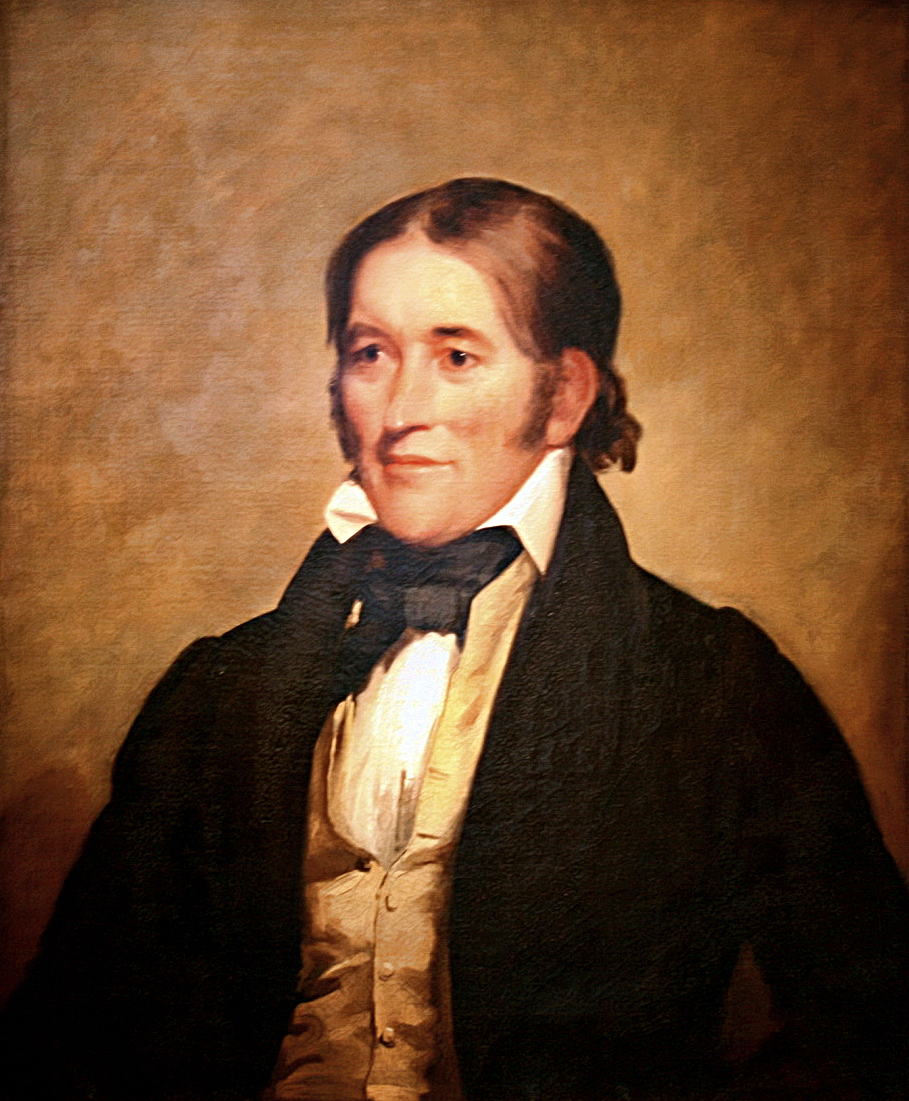
Davey Crockett or O. B. Mann: Who was the Real Hero?

David Crockett | Photo Courtesy of Google Photos

I would imagine that when most of you read the heading of this post, a smirk crossed your face and you asked who in the world was O. B. Mann? Furthermore, you probably wondered how could I possibly posit such a question when comparing a “no name” to an established heroic figure that every young person knows of either through reading books, or has seen in one of the two movies about the Alamo. Therein lies one of the major problems with the manner in which American history has been recorded and fed to our young in every school in this country. Truth be told, once the historical facts are revealed, O. B. Mann was a much greater person in his heroic efforts than Davey Crockett. My strong assertion is based on the causes for which each of these men was fighting in their lifetime.

 Every schoolboy knows Davey Crockett as that rough and tough frontiersman who wore the coonskin hat and could shoot a rifle with precise accuracy. Crockett is best known as the hero who, along with a cadre of fighters, took on Mexico’s General Santa Ana at the Alamo on March 21, 1836, and though they lost, put up a gallant fight for freedom. Visions of John Wayne playing the role of Crockett will be forever etched into the memory of adults as well as children in this country. He may have lost the battle that day, but he is revered because he took on an evil force and refused to back down to its wickedness.

The truth be told, that interpretation of Crockett and what he fought to preserve is fallacious and that is why the question; “Who is the real hero?” Davey Crockett was like many Anglos who drifted toward Texas because that’s where the action was. He knew, as did all the others fighting to free Texas from Mexico, that the key issue was slavery. Under Mexican rule, slavery was illegal and southerners who had migrated to Texas (which includes Crockett who was from Tennessee) insisted that they break free from Mexico simply because Santa Ana would not legalize slavery. The irony of the War of 1836 is the belief that it was a war for freedom. To the contrary, it was a war designed to eventually take away the freedoms of the Blacks living there, and also open the door for southern planters to cultivate cotton plantations with slave labor. Instead of Crockett fighting against the evil, he was fighting to spread an evil.

O B. Mann was a Black man not known by the overwhelming majority of American citizens. He owned, along with his brother, Mann Brothers Grocery Store in the Greenwood section of Tulsa, Oklahoma, better known as Black Wall Street. In May 1918, he was inducted into the United States Army and before the war ended was sent with the famous Ninety-Second Infantry Division, an all-Black fighting force, to the trenches in Argonne Forest where he fought with distinction. Like many Black Americans at the time, he was encouraged by Black leaders to put their differences with the country aside, go and fight for democracy and the conditions would change when they returned home.

Like thousands of others, Mann followed the advice of men like Dr. W. E. B. Du Bois and fought valiantly for this country, despite the flood of flyers dropped from German airplanes encouraging the Black soldier not to fight for a country that treated them worse than what the Germans would. They fought, and after it was over came home to discover that what the Germans told them was true.

Many of the veterans who returned to an oppressive apartheid system refused to accept the abuse and one of those men was O. B. Mann. A tall, imposing figure, he had no problem telling the racist in Tulsa that Black veterans would not allow any man or woman to be lynched on their watch. So on Memorial Day 1921, when word got back to the Black community that Dick Rowland had been arrested for accosting a white girl, and when the local newspaper the Tulsa Tribune editorialized that Rowland would be lynched, Mann returned to action. Early that evening he and his men confronted the white mob in front of the courthouse, and when one of the white men was shot and killed by Mann the battle was on.

Early in the morning of June 1, over 10,000 white men, filled with rage and hate, crossed over the Frisco Railroad Tracks and attacked the residents of Greenwood. But with his men, Mann put up a courageous fight defending their side of town. They were so successful that the enemy brought in airplanes that commenced to drop kerosene soaked explosives on the buildings and the homes.

Much like Crockett at the Alamo, Mann and his men were outnumbered and with the addition of the airplanes could only hope to hold off the mob until many of the residents escaped into the woods. They were successful and as a result probably helped prevent a great deal more murders than what actually happened. Despite his efforts, the slaughter of innocent men, women, and children was so gruesome that the state of Oklahoma hid it from the history books for years. Still, there is no mention of the brave deeds of O. B. Mann and his men.

Unlike Davey Crockett who was defending a fortress that if he had won, would have brought about the enslavement of thousands of men, women and children, Mann was defending a section of the city in order to protect his people from the evil determined to destroy them.

Therefore, the answer to the question posed earlier is evident; O. B. Mann deserves his place in the annals of American history as a real hero.

You can learn more about this hero in “Fires of Greenwood: Tulsa Riot of 1921.”