A Fine Event

One of the finest events that I have attended in many years was the National Book Club Conference in Atlanta, Georgia the weekend of July 28 to 30. This year marked the 15th Annual Conference where some of the best authors of both fiction and non-fiction mingled with the finest and best collection of book club readers in the country. The idea of bringing the writers and readers together for a weekend of what the founder calls “Literary Bliss” was the brainchild of Curtis Bunn, an accomplished writer with six novels and a seventh one due out in October of this year.

From the moment I entered the fabulous Intercontinental Hotel in Buckhead, I knew I was in for a wonderful treat. Curtis kicked the conference off with a breakfast featuring Jan Hargrave as the guest speaker, a professional lecturer and author who teaches how one’s body communicates to the world around it. After the breakfast, the over seven-hundred book club attendees began to peruse the various sessions. They could visit the “Featured Authors” sessions in which the writers would read from one of their works, of course with the intent to get the attendees to purchase their book as an individual or possibly recommend it to their book club as a future read.

It was a very eclectic group of authors, and you had your choice of listening to various artists read from their novels or non-fiction works as well as poetry. Curtis aims to please and tries to make sure he fills all his attendees’ appetites for the kind of works that excite them and leaves them wanting more.
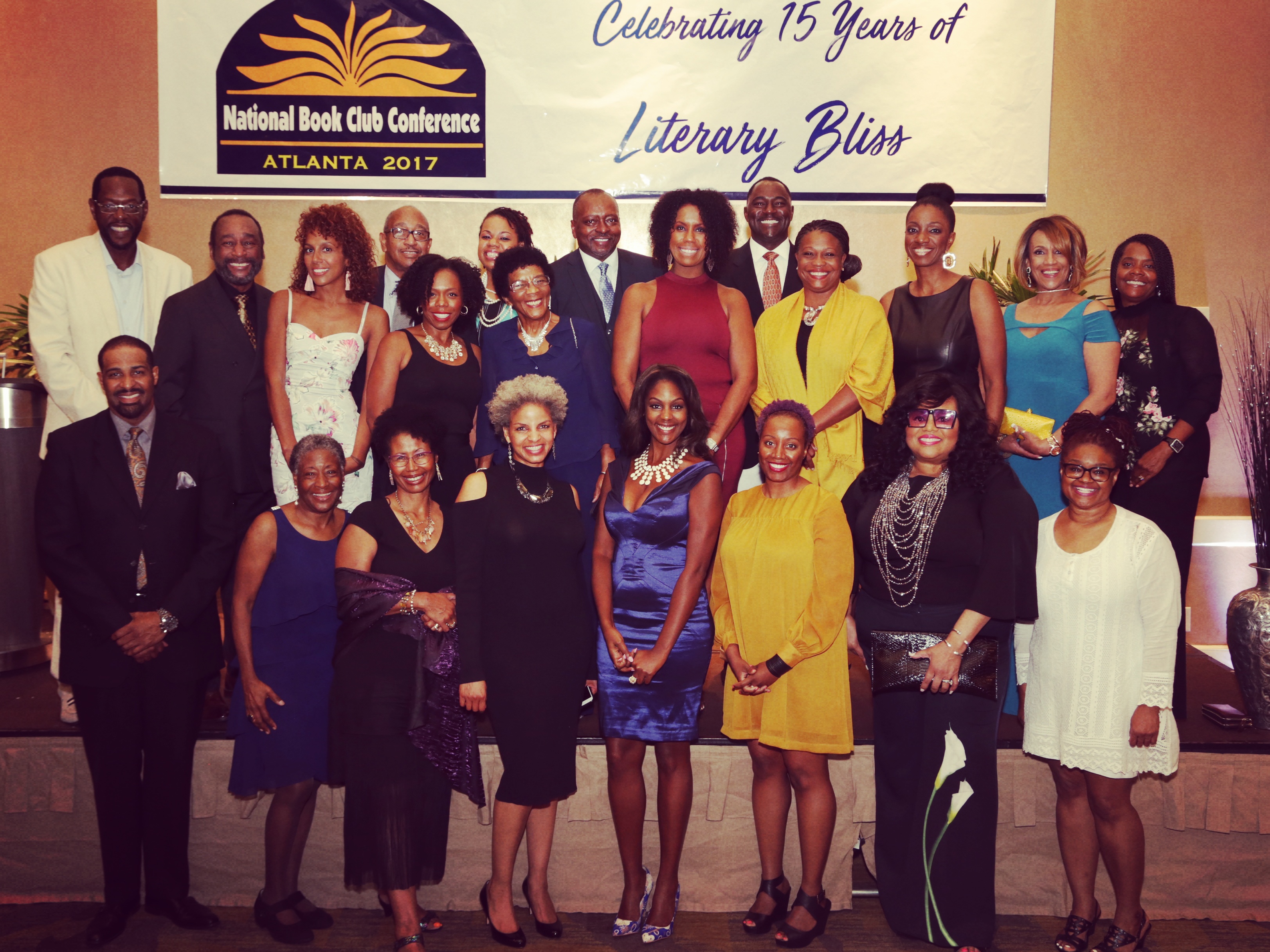
Even though I had the great privilege to be listed as a “Featured Author” (and I have written a number of books in my lifetime), my workshop was rather unique because my emphasis was on introducing the book clubs to a new and exciting publishing company, JAED Publications, a company that I serve as the Executive Literary Editor. I shared with the book clubs the concept that we have a need for a nexus connecting writer, publisher and reader within the African American paradigm. I was not there to criticize majority publishing companies, but just to let the ladies of keen literary discernment (I don’t believe there was one male book club there) know that three very dynamic Black women and one man (yes, it is sister dominated), have put their resources into a company open to writers of all ages. One of the company’s more dynamic, young authors, LaKendra Ford, joined me at the podium and shared with the attendees the theme and plot of her first novel to be released later in the year under the JAED label.

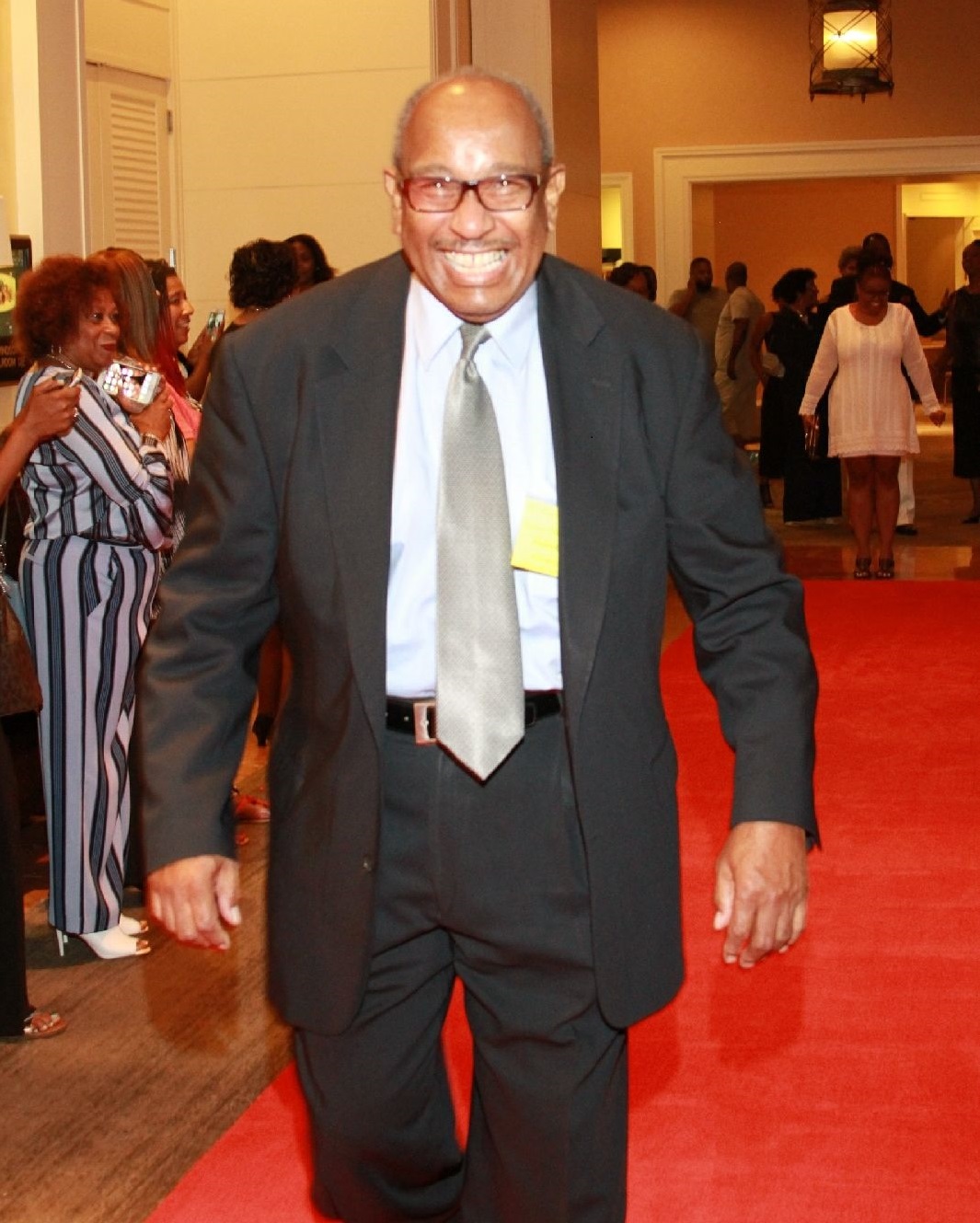
There were three key events of the conference. The first occurred Saturday afternoon when Michael Eric Dyson received the coveted Terrie M. Williams Inspiration award. The second, later that evening, when the featured authors “walked the red carpet.” As one of the authors, I felt it an honor walking down the red carpet and into the Windsor Ballroom for dinner. The third took place right after dinner, when Iyanla Vanzant received the Walter Mosley Author of Distinction Award. She then gave a rousing speech that electrified the room with encouraging words about our race, history and culture.
For all the “nay sayers” out there (where is Bill O’Reilly?) who view the incessant killings in the Black community and declare our culture is dead, should have been there that weekend. And they should have been there Saturday night when the “sisters of the race,” dressed in their finest, strolled in majestic fashion into the ballroom in overwhelming numbers, and let the world know that our culture is alive and well. Literature is the foundation of all cultures and literature was the subject for everyone in attendance. It was Literary Bliss and it can only get better. My hat is off to Curtis, who has accomplished something many might argue would be impossible to do, and that is to bring together that many African American readers under one roof. He proved that if you do put that fifty-dollar bill in the middle of the book, it will definitely come up missing if done around these sisters.

If you happen to read this post and belong to a book club, you must contact Curtis immediately and make your reservation for next year. I’ll be on the phone to him tomorrow. I just want to be there and be reminded of James Brown’s famous words to song, “Say it Loud. I’m Black and I’m Proud.”

“Why?” A Small Word with a Powerful Meaning

The word “why” is small in letters but large in impact. We always apply it when we are trying to find out why a specific act happened. It can be defined as “for what purpose, reason, or cause, with what intention, justification or motive. Let me now apply the use when analyzing the sage advice given to us by a number of great historical artists and our failure to adhere to their very wise words.

Let’s begin with the wise words of the great Paul Robeson, undoubtedly a Renaissance Man. He made the following statement in his autobiography. “In the early days of my career as an actor, I shared what was then the prevailing attitude of Negro performers, that the content and form of a play or film scenario was of little or no importance to us. What mattered was the opportunity, which came so seldom to our folks, or having a part—any part—to play on stage or in the movies; and for a (Negro) actor (actresses) to be offered a starring role—well that was a rare stroke of fortune indeed! Later I came to understand that the (Negro) artists could not view the matter simply in terms of his (her) individual interests, and that he (she) had a responsibility to his (her) people who rightfully resented the   traditional stereotyped portrayals of Negroes on stage and screen.”

Given Paul Robeson’s assertion that Blacks should not play stereotype roles, WHY would Halle Berry play  Leticia in Monster’s Ball, a role that perpetuates the age old stereotype of the Black woman being a sexual object, who doesn’t know how to love but only have sex.

The next observation comes from the greatest Black poet and an icon of the culture, Langston Hughes. He wrote as part of his critique of Richard Wright’s novel Native Son and particularly the character Bigger Thomas. “Where are the Black heroes in our literature. Where in all our books is that compelling flame of spirit and passion that makes a man say, “I too am a hero because my race has produced heroes.” The great poet was expressing his disappointment with the manner that Blacks were depicted in novels at that time.

Given Langston Hughes’ suggestion that novels and for that matter, movies, should create more heroes, WHY would Denzel Washington play the role of Detective Alonzo Harris, in the movie, Training Day; a rogue cop who is as big a crook and bad guy as the men and women he is supposed to be arresting. His partner Ethan Hawke, Officer Jake Hoyt, is the good, honest and reputable policeman, the hero and of course he is white. I imagine, Langston Hughes would have argued that the roles should have been reversed and Washington play the part of the hero policeman.

The final observation is from Ralph Ellison. He wrote, “The solution to the problem confronting the (Negro) will be achieved when he is able to define himself for what he is and what he desires to be.” Ellison obviously was referring to the fact that Black Americans have always allowed others to define them.

Ellison is essentially asserting that Blacks must begin to tell their story their way. If that is the case then WHY is a Black Hollywood Producer/Director using the novel Holocaust in the Homeland: Black Wall Street’s Last Days, written by a white woman, Corinda Pitts Marsh, as the point of view story for a movie about the Tulsa Massacre of 1921.  That slaughter occurred when over ten thousand whites crossed the Frisco Railroad Tracks into the Greenwood section of the city, best known as Black Wall Street, and killed over 300 Black men, women and children, burned down 33 square blocks of businesses and homes. WHY use this version of the tragedy, which really is an insult to the Blacks now living in the Greenwood section of the city as well as Blacks from all over the country, when he could at least consider Frederick Williams (yes that’s me) novel, Fires of Greenwood: Tulsa Riot of 1921 as the point of view novel for his movie? Is he essentially telling Black America that the white woman can tell their story better than they can? Do you believe that Hollywood would allow a Black writer to produce a novel and also screenplay on the Alamo? Do you believe a white woman writer can get into the head of Black man and for that matter women who lived in Greenwood in 1921? No more than I can get into the head of an Italian woman living in New York City in 1921.

Do not take my comments as some kind of sour grapes, but only as another example of how we fail to adhere to the teachings of those who have gone before us.

I guess the answer to the three WHYS that I raise, is simply because they can and they chose to do so. Race pride aside, money and success reign.