My Cousin’s Daughter Aramis and the Beauty of the Black Woman

Aramis Donnell Ayala is a young, beautiful, intelligent, and powerful Black woman who has come under attack from racists, who disagree with a decision she recently made as the State of Florida’s District Attorney in Orange and Osceola Counties. In many ways, Aramis is just the direct opposite of what has, over the last decade, become the media perception of the Black woman. She didn’t spend seventeen years in prison for drug distribution, and then come out as part owner of a music empire. She spent her years in the university pursuing a law degree. She doesn’t sleep with the man who has power so that she can have power, she has power of her own making. Like Michelle Obama, she contradicts the white media’s perception of the Black woman that has a very long history in this country. The Black woman has been less than the stellar representation of grace, beauty, and dignity. That role has been reserved for the white woman.

empire-leopard

There is precedent for the media’s distorted myth of the Black woman. It began as far back as the early Nineteenth Century when racist theorists found it necessary to demean the African in order to justify their sick system of slavery. One of those early distortions was the concept of God’s chain of beauty. According to this formula, God had created the white woman as the personification of beauty, and every male regardless of race craved her. According to this theory, at the bottom of this chain was the Black woman and no male actively sought her, not even the black man. So who was left to be with the Black woman? Again, according to this theory, the suitor for the Black woman was the orangutang, and she would be just as happy and satisfied with his company. (Please note I am articulating a sick theory of racism)

Then there was the Thomas Jefferson’s scientific study printed in his book Notes on the State of Virginia, where he claims to have carried out an examination of the nature of the Black man and woman. One of his findings was that the Black race lacked loving compassion, and were more animalistic in their sexual behavior. All these racists theorists claimed that the woman was sexually driven, and constantly seeking the sexual favors from the white man. This was so prevalent that when a white rapist was brought before a white judge in 1900 Alabama for raping a Black woman, the judge dismissed the case because, according to him, all Black women craved the white man so it couldn’t have been rape.
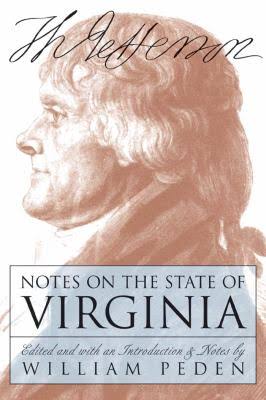
Notes On The State Of Virginia

Even though every sane, rational thinking human being, recognized this distorted perception of the Black woman it continued to exist. Fast forward to the contemporary roles that Black women play in many movies and television programs. These roles are not stellar portrayals of her, in many of these shows. And these distortions reached its lowest level of absurdity in the movie Monster Ball, a story that features a Black woman willing to have sex with a racist pig, who I believe was her husband’s executioner in prison. How low can you go?

But Aramis and Michelle negate those false portrayals through real life examples of the modern Black woman. Still the perpetrators of these distortions continue. Michelle was compared to an ape and the legitimacy of her accomplishments were challenged, and she was referred to as the “angry Black woman,” on numerous occasions.  And just recently, a racist in Florida suggested that Aramis should be “tarred and feathered” or hung from a tree. In his mind, this is something you can do to a Black woman, but he would never dare suggest that as punishment for somewhat white.

On a personal note, I am so proud of Aramis, who is my cousin’s daughter. I have known this bright young lady all her life as well as her sister Amber, who also is quite accomplished and their only brother Glenn, who is the oldest of the three. Their mother and father are great examples of parents, who worked hard to make sure their children received the best education, understood their ethical and moral responsibility as young Blacks, who often would be judged on the distorted definition of black and not on their own merits. Their grandmother, my Aunt Ellen, also set an illustrious example for them to follow as a strong Black woman, who loved her family and worked very hard to make sure they always had the best she could offer. Aramis, her sister Amber, their mother Natalie, and my Aunt Ellen are strong contradictions to what we often see portrayed on television and in movies about the Black woman. And they are only the tip of the iceberg. Black pride and womanhood runs deep in the Black culture and is the strength on which that culture has been sustained over the centuries. Any other projections of Black womanhood are serious distortions of reality.download


Response to the Author | “What’s in a Name?”

Back on October 4, I had posted on my writer’s blog,” What’s in a Name?” The purpose for that particular post was to challenge those who have changed their name from what they perceived as a “slave name,” to what they perceived as an African name or no name but only a letter. In that post, I questioned does the name make the person? One of the most profound responses I received was from Brother Andrew Jackson (Sekou Molefi Baako), Executive Director, Langston Hughes Community Library and Cultural Center at the Queens Library in New York. His synthesis of both the African American and African names is worth posting so that all those who read my post can also have the pleasure of viewing his analysis.

Greetings, Brother Man!

I’ve been asked that same question during my years here at Langston Hughes Community Library, and Cultural Center, especially since I share the name of our 7th President and one who’s record with both enslaved Africans and Native Americans is questionable at best.  In 1994, I received the first three of the five African names given to me, (Sekou-Warrior, Molefi-He keeps Tradition and Baako-First born-of the Jackson Triplets),.My mother asked me if I was giving up the proud family name Jackson and Andrew-after her father, and Preston-after my uncle for “…some names she could not even pronounce?

It was then that I made a decision to put into practice the Second Principle of Kwanzaa’s Nguzo Saba, Kujichagulia (Self-Determination).  I decided I would not give up my American (slave) names out of respect for my ancestor grandfather and uncle and the other ancestor Jacksons who had suffered in one of the most racist states in America, Mississippi.  They suffered so I might have a better life and privileges they were denied.  I would keep both sets of names to connect my African past with my American present. Together they make me a complete human being.  I use both sets of names interchangeably and am known by both.  Both sets of names  appear on my signature block, on my business cards and stationary.  I am Andrew P. Jackson (Sekou Molefi Baako)!  (The other two names I was given are Bhekizizwe-take care of your people and Orbai-teacher.  They suffered so I could have the choice of keeping both names or changing them.  The made that possible, not the names. and not me.

So, this question is a common one, but it is not what names you have, but who you are through action and deed. I wholeheartedly disagree with those Afrocentric brothers and sisters who believe you have to have an African name to be truly Black or African; in order to respect, acknowledge, understand and practice your African heritage.  I know too many brothers and sisters with African names who disrespect their ancestors and ancestry and their love of self and other Black people is questionable at best.  Too many hypocrites who carry African names but disrespect our women and themselves, our people and their names.   I know too many brothers and sisters who spit the rhetoric but don’t commit themselves to building a strong Black community for tomorrow.

Each of us has the blood of Africa flowing through our veins. We are African people, descendants of enslaved, kidnapped Africans and brought to the New World to build this country, the Caribbean Islands and worked in the mines of Brazil.  Our ancestors suffered, overcame and survived for us their children and great grand children.  We come from strong stock of humans who survived in spite of 400 years of slavery and many more years of American oppression.  Yet, too many of our brothers and sisters know little of their rich African history prior to being enslaved, know nothing of the rich history of the Ancient African Empires or the contributions we made to the world and America.  Africa, the second largest continent, where most, if not all of the natural resources the world needed and still needs can be found today.   Africa, located in the middle of the world map.  Africa where life on this planet began.

What’s in a name?  Indeed!  I am Andrew P. Jackson (Sekou Molefi Baako)!  A Proud African man living in America. An activist librarian, an educator, an author, an African Man, a Proud Black Man, descendants of slaves.

What’s in a name?  Each of us has to ask ourselves that question and answer it for ourselves.  That is not the right of others.  And, yes, you are so right did that make Crispus Attucks, Mary McCleod Bethune, Salem Poor, Sojourner Truth, Nat Turner, Marian Reginald Lewis, Wright Edelman or James Baldwin less because they didn’t have African names?   Our lives are not measured by the names we carry, its based on the lives we live and what we do during our lifetime.

aj