How Empire Broke Down Stereotypes

Empire’s Cookie Lyon: “A New Kind of Black Woman”

In a recent article in Huffington Post, Zeba Bay, from Voices of Culture, wrote an article on the FOX television series Empire. The title of her article was, “How Empire Broke Down Stereotypes By Embracing Them.” Ms. Bay argues that the value of Empire is that it allows us to combat stereotypes by accepting and embracing all versions of ourselves and acknowledges that blackness is not a monolith. She considers Cookie Lyon an important deviation from the polite characters that have traditionally been acceptable for television. She points to Clair Huxtable as the prototype character who fits that categorization.  She then suggests that Clair represents an unbelievable standard by which to measure characters and it is unfair to do so. In a most extraordinary statement, Ms. Bay then writes that Cookie, “Is a new kind of Black woman on television and she is one that we desperately needed.”

WOW!!!!!!!!

cookie-from-empire

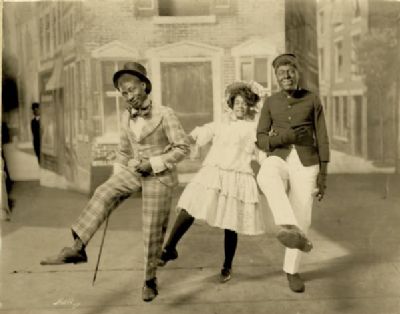
I don’t really know where to begin or better still should I even bother. I guess if Ms. Bay had the need to write that a street-hustling, dope-selling, finger-popping, filthy-mouthed, weave-wearing con, who spent seventeen years in jail, is the new kind of Black woman maybe I should just leave it alone. But to suggest that we embrace stereotypes as a way to deal with them is just a bit much. Using her logic, then our ancestors should have accepted the stereotype portrayals of them in minstrel shows and early movies like Birth of a Nation. At the turn of the century, whites accepted those kinds of stereotypes so that was reason enough for our ancestors to reject them as they did. Minstrel shows used skits and songs performed in an imitation of Black plantation dialect. After the Civil War, white minstrels concentrated their portrayals on the nostalgic stereotype of “Old Darkey.”

Blacks were depicted as carefree, caught up in a life of constant child-like singing, dancing and frolicking. In 1906, Fred Fischer, sold over three million sheet music copies of his first hit, “If the Man in the Moon were a Coon.” The coon was not just the traditional ignorant and indolent figure for derision, but he was devious, dangerous, and sexually on the prowl.  Blacks were even allowed to perform in minstrel shows only if they identified themselves as the “real coons.”

Minstrel shows reinforced the perception of the hat in hand, the downcast eyes, the shuffle and scrape, the fumbling words, the head scratching and grin description of the Black man. Whites lined up outside in order to get into theaters to see these insulting acts performed for the entertainment at the expense of an entire race of people. The perception that white audiences had of the Negro was of a clown. The theatrical darky was childlike; he could be duped into the most idiotic and foolish schemes…his songs were vulgar and his stories the most gross and broad; his jokes were often on himself, his wife or woman. He was slow of movement, or when he displayed a quickness of wit it was generally in flight from work or ghosts. (Nathan Huggins, Harlem Renaissance, Oxford University Press, New York. 1971 pg 251) Unfortunately Black Americans could do nothing but stand by and observe the deracination of their culture and character. Now we have Empire, which is nothing more than a modern day sophisticated version of the stereotypes of the past. For Ms. Blay to suggest we embrace the stereotypes as a means of dealing with them is an insult to our culture.
danses_72

I imagine many of the seventeen million viewers of Empire last year were white and they probably embraced the stereotypes running rampant in that television series just as their ancestors embraced the perceptions of Blacks back in the 19th Century. And like Black folks in the past, isn’t that sufficient reason for us to reject them now.


White Racism and Plato’s “Allegory of the Cave”

“Behold, human beings living in an underground den…here they have been from their childhood, and have their legs and necks chained so that they cannot move…and they see only their own shadows, or the shadows of one another, which the fire throws on the opposite wall of the cave…To them, the truth would be literally nothing but the shadows of the images.”

Plato

Republic, Book VII


The great Greek philosopher Plato’s “Allegory of the Cave” describes a group of people who have lived in a deep cave since birth, never seeing the light of day. The shadows of puppets being manipulated are all they can see. These shadows become their truth and in essence their reality, until finally one of the prisoners escapes and is exposed to a world he never knew existed. Scholars and intellectuals have interpreted the meaning of the allegory in many different ways. The interpretation most inviting to me, is that the allegory is about human ignorance and a people who are not capable or willing to seek the truth. That is most intriguing, because it is applicable to a specific segment of the population in the United States.

Throughout this country’s history, the most difficult struggle has been between the races. The problem stems from the fact that for a very long time, white America was much like Plato’s prisoners living in an underground cave. Trapped in a two to three century lie, they were taught that there was something very special about them; and that they were the cream of the earth. Their white skin made them superior to all other people. And they were ecstatic about their status. Just like no one could have gone down into Plato’s cave, and convinced the caged people that what they saw were only mere shadows until they actually experienced the reality themselves, no one could even suggest to white America that what they were taught was not the truth. They were the superior race and all others must always remain subservient to them. And that was especially true of the black race. After all, one of the first lessons they were taught imbued them with the belief that black was and always would be inferior to white.

This undated image that appeared on Lastrhodesian.com, a website being investigated by the FBI in connection with Charleston, S.C., shooting suspect Dylann Roof, shows Roof posing for a photo while holding a Confederate flag. The website surfaced online Saturday, June 20, 2015, and also contained a hate-filled 2,500-word essay that talks about white supremacy and concludes by saying the author alone will need to take action. (Lastrhodesian.com via AP) MANDATORY CREDIT

On June 17, a very sick captive in Plato’s cave walked into a church and destroyed the lives on nine beautiful souls. They were black and therefore a danger to his existence. He had an obligation to destroy those lives, even though momentarily he experienced the light that comes to one when they escape the cave. He has admitted that he considered calling off his plan of destruction, but in the final analysis the influences of the shadows won out. After the same kind of vicious and violent attack that killed four innocent little girls in the Sixteenth Street Baptist Church in Birmingham, Alabama in September 1963, Dr. Martin Luther King, Jr. spoke for those beautiful victims when he said, “They say to us that we must be concerned not merely about who murdered them, but about the system, the way of life, the philosophy which produced the murderers.” The same can be said 52 years later on behalf of Sharonda Coleman-Singleton, Cynthia Hurd, Susie Jackson, Ethel Lance, Reverend DePayne Middleton, Reverend Clementa Pinkney, Reverend Daniel L. Simmons, Tywanza Sanders and Myra Thompson.

8107901_G

We all can get some consolation knowing that in the year 2015, the killer will receive the ultimate punishment and probably be put to death. That represents a radical change for a state like South Carolina, and for that matter anywhere in the South. Just one hundred years ago, he would have received a pat on the back, simply because most of the South were still captives in that cave and all they could see were the shadows.