Dr. Ben Carson: You don’t have to agree with him. But he is one of us!

I can vividly recall the year that President George H. W. Bush nominated Clarence Thomas to be on the United Supreme Court. It happened years after I had worked as a Legislative Aide to Senator Birch Bayh, while Thomas worked for a Republican Senator John Danforth from Missouri. It was the late 1970’s, and a time when many Senators hired Black staffers in key positions. Thomas was one of those few.

There were about twenty of us who made the decision that we would rise above political parties, and come together once a month for a luncheon to discuss issues relevant to the Black community. We had some very outstanding guests speakers, among them Supreme Court Justice Thurgood Marshall. Before he began his remarks at our luncheon, the great man told us that he usually did not accept invitations to such gatherings, but was so proud of who we were and what we represent for the progress of the race that he decided to be our speaker. Clarence Thomas did not show up. In fact, he never showed up. So years later when he was elevated to the Supreme Court, I spoke out that he was not a Black man filling the shoes of another Black man. But now as I look back, I was wrong. Clarence Thomas is a Black man who has experienced the same economic and social oppressions that we all did before the Civil Rights Movement. Just because he responded to that oppression differently than most of us, cannot negate the fact that he comes right out of our culture.

clarencethomas

That brings me to Dr. Ben Carson.  The Black liberal community will not support Dr. Carson’s bid to be president. His politics are different from most of us.  But just because he does not share the majority of Black America’s proposed remedies for the problems plaguing our communities, does not mean he is a sell-out. And because he does not agree with us politically is no reason to jettison him out of our culture. Liberals and Democrats do not have a premium on what is acceptable as part of Black America. We are much more than just Al Sharpton, the NAACP, the Urban League, the thousands of Black ministers, the Nation of Islam and all the other organizations that lay claim to be the gatekeepers of our people.

Dr. Carson’s history in this country mirrors most Black Americans. He certainly does with me. I am familiar with the projects in Detroit where Dr. Carson grew up in the 1950’s and 60’s. And I am familiar with the east side of Detroit and Hastings Street. As a young boy growing up in Saginaw, Michigan, I would visit my uncles attending Wayne State University at the time. They lived on the east side and I have memories of hearing the blues coming out of the night clubs, the smell of barbeque, the pawn shops, the liquor stores and the churches. I’m sure those are the same memories that Dr. Carson has of that section of the city.
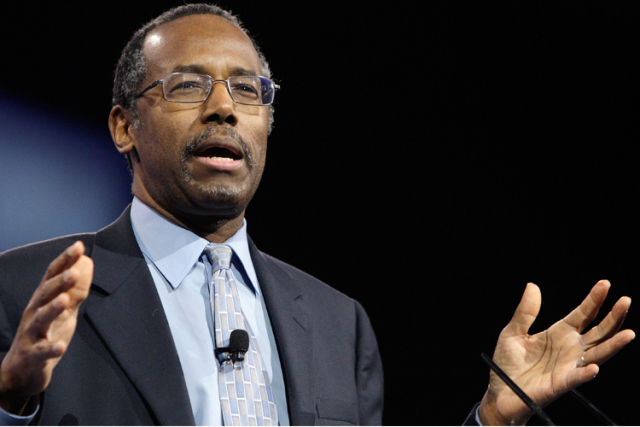
Dr. Carson’s roots are in rural Georgia, home of both his parents but he was born and raised in Detroit. My roots are in rural Arkansas, where my mother was born about the same time as Dr. Carson’s parents. But like Dr. Carson I was born and raised in Saginaw. I imagine that our parents were all part of the great migration North during the first half of the 20th Century.

My point being that one’s political and ideological leanings are a minor part of one’s cultural identity. Culture reflects the cumulative history of a people. Dr. Carson and Clarence Thomas are products of that history, a commonality shared by all Blacks born in this country. Because of his conservative views and because he is running for president in the Republican primary, I would find it very difficult to support him if he made it to the general election. But if for a moment, we could block out his conservative views and imagine him as a liberal Democrat, wouldn’t he make the ideal candidate for Black America to support going into the election.
Music to Remember

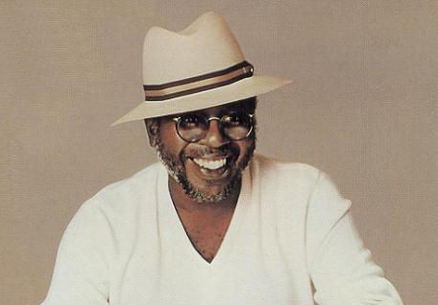
The other night while making some editing changes to the manuscript of the life story about George “Iceman” Gervin, I tuned into Sirius XM Radio, Channel 49 Soul Town. The channel specializes in “back in the day sounds” from the 1960’s and 70’s. Just as I tuned in Curtis Mayfield’s smooth sounds, “Prettier than all the world. And I’m so proud of you. I’m so proud of being in love with you,” flowed from the speakers. The station was playing his hit song from the album, The Anthology: 1961-1977. Those two decades were very magnificent years with some magical music for and about Black America. I remember them well. It was a time when you had Curtis Mayfield paying respect to our beautiful Black sisters with love songs like “Talking About My Baby,” and “Only You Babe,” as well as some socially relevant songs like “Keep on Pushing,” “People Get Ready,” We’re A Winner,” and “Move on Up.” Curtis was in good company with artists like Otis Redding, “Show a Little Tenderness,” Jerry Butler, “For Your Tender Love,” Marvin Gaye, “What’s Going On,” and “Too busy thinking about my baby, I ain’t got time for nothing else.” We had the soft and pleasant voice of Aretha Franklin, “Say A Little Prayer,” and “Respect;’ Gladys Knight, “Midnight Train to Georgia” and “Neither One of Us;” and of course the all time classic Etta James, “At Last,” to name only a few. There were also iconic groups like the Temptations, “Just My Imagination;” the Four Tops, “When She Was My Girl;” and the Supremes, “Come See About Me,” and “Back In My Arms Again.” These were the artists of the 1960’s and 70’s, and they gave us absolutely gorgeous songs with magnificent words of love and hope.

curtis-mayfield

These artists also brought us something else that is very difficult to describe and capture in words, without the sounds of melodic voices to back it up. They brought us the essence of what it is to be Black in America. And most important, it belonged to just us. You could go from one house to the next and hear the same sounds coming from them all; and that was a unifying factor. When Curtis sang, “People get ready, there’s a train coming,” we understood what he was telling us and we all knew about that train. When he sang, “If you had a choice of colors, which one would you chose my brothers,” his message was clear; we must get over the problem of skin color because it was only a superficial way to measure the value of a person. And then there was Bobby Womack’s, “That’s the way I fell about cha,” and we all related to that feeling. Gladys Knight touched deep within us all when she told us to, “Make Yours A Happy Home.” The artists and songs I mention here are only the tip of the iceberg of the fabulous artists that provided us with great music during an outstanding twenty-year period in our history.

My frustration as a writer is my desire to give the written word the same kind of soothing power that we got from our music. My goal is to deliver the message in words, as those artists did in song. Good writing and good music are synonymous. If they both reach their intended goal, then the listener and the reader feel much better about themselves and the people around them. Good writing and good music are about love and not hate. They are about peace and not violence. They allow the dreamer to dream of better times and a better world. They are not corrupting, vicious and ugly. They do not tear down, but build up. Good music and good writing are universal in that they will still be relevant decades from now. And most important, good music and good writing will tell our progeny about the kind of people we were in the beginning of the Twenty-first Century.

The question is how do we come up with a method to determine the quality of the works that represent us as a people? Allow me to suggest that we need only look back to our past, in those glorious days of the 60’s and 70’s; and if we establish an icon such as Curtis Mayfield as our standard bearer by which to measure our greatest qualitative achievements in music, then we can never go wrong.