
Most people today do not consider Dr. Martin Luther King Jr. to be, in any way, a radical. For example, during the King Holiday Celebration the one speech you will hear over and over again is, “I have a dream.” That’s acceptable to most of the country because it is all-inclusive. He was talking about young white kids and young black kids holding hands. It sounds like his ideal world will exist when whites are willing to take us under their wing, and accept us as their equals. But there is a lot more to Dr. King than this non-confrontational, passive nature. He had the audacity to suggest that black is beautiful, before James Brown proclaimed: “Say it Loud. I’m black and I’m proud.”
In a speech given very little recognition, Dr. King told an audience of Black Americans in 1967 to, “Believe in yourself and believe you are somebody. Nobody else can do this for us. No document can do this for us. No Lincolnian Emancipation Proclamation can do this for us. No Johnsonian Civil Rights Act can do this for us…Be proud of our heritage…Somebody told a lie one day. They couched it in language that made everything black, ugly and evil…But I want to get the language so right tonight, that everyone will cry out “Yes, I’m Black and I’m beautiful.”
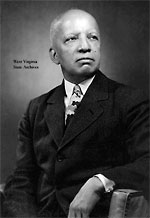 I now can understand why this speech receives very little recognition, as part of the King celebration in January of every year. These were empowering words, with a totally different meaning than, “I have a dream.” The words were not about reconciliation between the races. They were meant as rehabilitation within the race. Rehabilitation for a people who had been denied the dignity that their color deserved for decades. Forty years after Dr. W. E. B. Du Bois had made the same observation, Dr. King found it necessary to reiterate that identical message to his people. Don’t you think it is time that we realize very little is going to change unless we accept the advice of these great men, and begin the process to redefine the meanings that have been attributed to the color black in the past? The great historian, Dr. Carter G. Woodson also had these words for us to ponder, “To handicap a person by teaching him that his black face is a curse, and that his struggle to change his condition is hopeless is the worst sort of lynching.
 Every Sunday, in practically every black church in this country, some preacher will quote from the Bible to, “Love your neighbor as you love yourself.” But how is it possible to love someone else, if you haven’t been taught to love you first? I believe in prayer, but I also believe what Fannie Lou Hamer said over fifty years ago, “You can pray until you faint, but unless you get up and try to do something, God is not going to put it in your lap.” We as black people need to try something else. We must take heed of Dr. Du Bois, Dr. Woodson and Dr. King and begin the process of redefining who we are for ourselves. If we do not accept this challenge to incorporate Dr. King’s radical idea into our belief system then, “something worst than lynching” will continue to plague us as a people.
 thewriterfred