Santa Claus at Christmas

black-santa-clausThis Christmas, I’ve been giving a lot of thought to Santa Claus. Yes, Santa Claus. And for all of you who might think I am digressing to a time in my life when Mr. Claus was relevant, that is not the case. But I have thought about the jolly ole Saint Nick in relation to his symbolic meaning, and exactly where we are as a country this late in a very turbulent year. As I recall from my much younger days in the past, Santa Claus spied on all of us from his perch in the North Pole, and kept a record as to whether we had been naughty or nice. On Christmas Eve, as he loaded all the toys into his sleigh and fed the reindeer who would take him all over the world, he also reviewed the list of young folks whose chimneys he would come down and leave requested gifts, under the Christmas tree.

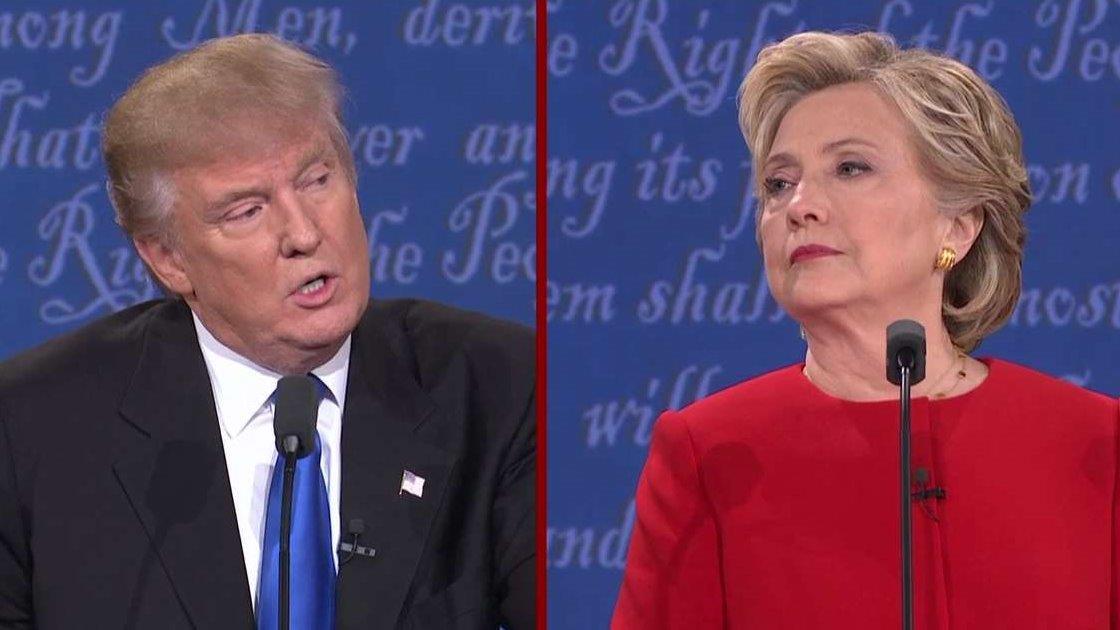
Using our creative imagination, let’s consider our country as one big kid who has been under surveillance by Santa and his helpers for the past twelve months. As early as January 2016, he knew there might be problems with this child. The bickering was getting out of hand, as the country prepared for what would be a nasty election. This was something that Santa did not condone. After all, he was always jovial and happy and wanted others to display the same demeanor all the time. One man in particular caught his attention. He sought the highest elected office in the country, and was willing to use bully tactics against his opponents to achieve his goal. According to Santa’s standards, he never made a stop at the homes where bullies resided.

The other person seeking the highest office wasn’t quite as bad as her opponent, but she also lacked the kind of values that Santa expected from anyone who would receive a visit from him. She often stretched the truth to cover up her misdeeds, especially with her use of emails. As of Christmas Eve, he wasn’t sure if she would get a visit from him because of the ambivalence he felt toward her.
trump-clinton-face-new-scandals-ahead-of-debate

Then there is the rest of the country, divided in support of these candidates.  Both sides were willing to step outside the bounds of civility in support of their candidate. In fact, grown men often went to blows in the heat of the battle. But according to Santa Claus, it should never have been a battle, but simply an election. They all lost a sense of comity, and carried on in a manner unsatisfactory to Santa. There was a slight possibility that the old man might just skip over the United States, and keep on South into Mexico.

santa-and-reindeer-2

But on second thought, as he prepared to take off, he considered that maybe his presence could make a difference and bring peace, love, and unity back to this country, desperately in need of help. Maybe he could influence this obstreperous child to change its ways, and help the occupants of this country to understand that they all have too much to lose to carry on in this manner. Maybe his presence for just a little while, on the eve of the birth of the person who came to earth to save mankind from its own self-destruction, would make a difference in how they treat each other, going into the new year. Maybe in 2017 they would all come to their senses, and realize this selfish and vicious behavior must end.

He thought he might leave gifts of a different nature than in the past. These gifts would be for a better understanding that we all must reach out, and do what is in our power to make sure that Santa returns every year. A gift to understand that it would be cruel and deplorable for the country to repeal Obamacare and leave over twenty million men and women without health care coverage. A gift to understand that it is necessary to raise the minimum wage, so that those at the lowest rung of the economic ladder might live more prosperous lives. Instead of the top one percent hording the resources, they should be shared more equitably among all the people. Santa could remind the country that Jesus left the message, “Truly I tell you, whatever you did for one of the least of these brothers and sisters, you did for me.”  Yes, Santa might be able to get us back on the right track, and live up to all the promises made in the United States Constitution that all men (and women) are created equal and should be treated as such. And that the values found in the First, Fourth and Fourteenth Amendments far exceed the perceived guarantees of the Second. Maybe, just maybe Santa Claus could bring all of us back to our senses and recognize we must give, “Glory to God in the highest and on earth, peace and goodwill toward men and women.” And we all will be better off as we head into a new year.

A VERY MERRY CHRISTMAS TO YOU ALL FROM SANTA CLAUS

AND

THE WRITER FRED AND FAMILY!

williams_family

Considering the Tulsa Riot of 1921 from a Black Writer’s Perspective

It was recently revealed in an Ebony story that John Legend and his company Lifted Film, along with actress Tika Sumpter, plan to do a mini-series on the Tulsa Riot of 1921. In the article, the writer mentions, as a reference, a piece I did for Ebony On-Line on February 24, 2014, titled “Black Wall Street: A Legacy of Success.” The article was written right after the release of my historical novel, Fires of Greenwood: The Tulsa Riot of 1921. Because they have generated renewed interest in the story, I thought it appropriate to re-print an article I wrote months ago on how I came to write this novel. So here it is.

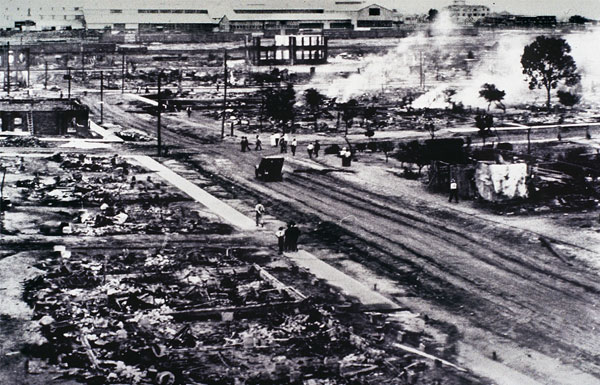
Seven years ago I began my research into the Tulsa Riot of 1921. The result of that study was the release of Fires of Greenwood, a novel that chronicles the barbarous attack on a prosperous Black community, leading to the brutal killings of over three hundred men, women and children, and the destruction of thirty four blocks of successful businesses and beautiful homes. As we have witnessed throughout our turbulent history in this country, the official reason given for the massacre was the alleged attack of a young white girl, Sarah Page, by Dick Rowland, a nineteen-year-old Black bootblack. However, the actual facts of what happened in the Drexel building elevator on May 30, 1921 between those two, do not support the alleged reason for the massacre. I was, therefore, determined to write a novel depicting the real truth behind the slaughter of three hundred Black Americans, at the hands of a white mob.

black-wall-street-statss600x600

Besides the mysterious relationship between the Dick and Sarah, what I found most compelling was discovering just how prosperous Black Americans were in their segregated community known as Greenwood. In fact, when Booker T. Washington past through the city on his way to speak in Boley, Oklahoma in 1905, he was so impressed with the number of successful businesses in the Greenwood corridor, he coined the term “Negro Wall Street” (once the term Negro was no longer acceptable, it was changed to “Black Wall Street”) as the best way to describe the area. Years later, in March 1921, Dr. W.E.B. Du Bois was just as impressed with the number of successful businesses, when he visited the community and delivered a speech at the Dreamland Movie Theater, owned and operated by Black entrepreneurs John and Loula Williams.

brookie_art_caro_article-small_38560

My research also brought to life the Gurley and Stradford Hotels, places of lodging for Black visitors to the city. Dr. Du Bois actually stayed at the Gurley Hotel during his visit there. However, it was not considered the better of the two; the Stradford was the finest Black owned hotel in the country, and easily matched the white hotels in Tulsa for convenience, luxury and comfort. John Stradford and O. W. Gurley were two of the richest Blacks in Tulsa. Both men had become millionaires before all was lost on that dreadful day in 1921.

In addition to the Gurley and Stradford, there were William Anderson’s Jewelry Store, Henry Lilly’s Upholstery Shop, A. S. Newkirk’s Photography Studio, Elliott and Hooker’s Clothing Emporium, H. L. Byar’s Tailor Shop, Hope Watson’s Cleaners and Lilly Johnson’s Liberty Café that served home cooked meals at all hours, while nearby Little Café is where people lined up waiting for their specialty chicken or smothered steak with rice and brown gravy. And there was the famous Little Rose Beauty Shop, run by the matriarch of the community Mabel Little.

The area possessed fifteen Black physicians and Dr. Andrew Jackson was recognized by the prestigious Mayo Clinic as one of the finest doctors in the country. The community also built its own hospital and the magnificently structure Mt. Zion Baptist Church, known to rival any other church in Tulsa or the entire state of Oklahoma. All this came crashing down, as the invaders dropped turpentine soaked firebombs that lit up the entire community and torched many unsuspected men, women, and children.

The tragedy that befell the prosperous Greenwood district, as well as other similar communities in this country, was that Black Americans were too successful, and a jealous and envious white community was determined to eradicate those businesses. That egregious attack on innocent citizens was not about a Black man accosting a white girl. It was about Black men and women who had bought into the Booker T. Washington position that hard work and a commitment to the American dream of capitalism would pay off handsomely. O.W. Gurley, a strong advocate of the accommodationist approach, found out just how much whites respected successful businessmen and women of the darker hue when they shot his wife and burned down his hotel.

banner1

tu013d

Tulsa clearly points out that the only acceptable behavior whites would condone was for Blacks to be passive and subservient to them. “Uppity” became synonymous with Black men and women stepping out of the role as servants and field hands. However, the positive message that shines through the pages of Fires is that Blacks in Tulsa refused to condescend to the arrogance of the majority, and were willing to fight and die rather than allow an innocent Black boy to be lynched by the mob. Finally, this writer portrays the relationship between Dick and Sarah in a manner not pursued by the many other researchers, who have studied the causes of the riot. The portrayal of their involvement makes for an interesting and entertaining read, which should always be the goal of the novelist.

timeline_pic01This novel re-creates the events that led to this slaughter and brings to life true heroes who stood up to the evil and fought back. It is imperative that Black writers begin to “tell our story our way,” and that is what I have done in the pages of Fires.  Eminent scholar and Harvard Law Professor Charles Ogletree noted that, “Frederick Williams has taken the 1921 Tulsa Riot to new heights and reminds us all that we cannot forget the African American community that battled to protect their dignity and respect. We will never forget what happened to the members of “Black Wall Street’ and will make sure that generations of people will forever remember the hard working men and women who fought to preserve their dignity.”

Prosperity Publications, the publisher has contracted to convert this work into a screenplay and will pursue producing a movie that will be as compelling as recent movies such as Selma, The Butler and Twelve Years A Slave. In the meantime I invite you to purchase the novel through Amazon or communicate with the company at www.prosperitypublications.com., or leave a message here on my writer’s blog.  A novel is always more comprehensive and thorough than the movie and that will be true with Fires. 

You can also visit the website of the Greenwood Cultural Center at www.greenwoodculturalcenter.com or the John Hope Franklin Reconciliation Park at www.jhfcenter.org both located on the grounds of the tragic events that happened on June 1, 1921, 95 years ago.